Click on images below to enlarge:
|
 |
| Imperial War Museum
|
|
|
|
|
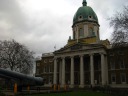
The Imperial War Museum is housed partially in the former Bethlehem
Royal Hospital (the domed building). It's one of the first homes for
the mentally ill. You may know it by another name (and as the origin
for a word): bedlam.
Also note the huge battleship gun in the
foreground left.
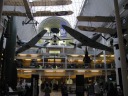
| The central lobby, packed with military hardware.
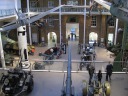
| Another perspective on the lobby: artillery, rockets, and more.
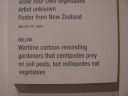
| In the exhibit on food and rationing during WWII, an informative sign to
help Brits who are contributing to the war effort by doing their own
gardening.
|
|
|
|
|
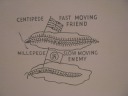
| A bit more explanation about why the millipedes are Nazis but the
centipedes are Brits.
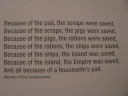
| A poem about conservation.
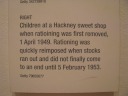
| I didn't take a photograph of the picture this was captioning; I just
thought the caption was remarkable in itself. I guess people didn't
realize how large the suppressed demand for candy was.
|
|
| Dinner at Koya
|
|
|
|
|
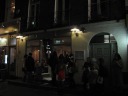
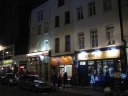
| The entrance to Koya,
an udon-noodle shop, and its accompanying queue.
| Across the street. Frith Street has a bunch of other
interesting-looking cafes.
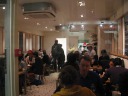
| Koya's homey interior.
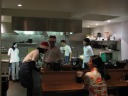
| We sat at the counter in the back, next to the open kitchen.
I
enjoyed eavesdropping on the two cooks who sat next to us as they talked
about where they worked, what they've eaten, and their thoughts on food
in general.
|
|
|
|
|
|
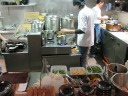
| The open kitchen. I'm always amazed how quiet a well-run kitchen is.
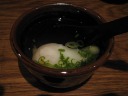
| Onsen tamago / onsen egg. Di Yin likes these a lot, and I enjoyed this,
but I prefer the one time she made it herself successfully.
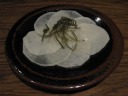
| The house-made turnip pickles. They were strong!
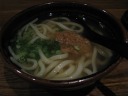
| My atsu-atsu buta miso: hot udon noodles in a hot broth with pork
marinated in miso paste. I liked the flavor on the pork: moist,
shredded, unami goodness. The noodles had a nice bite to them.
|
|
|
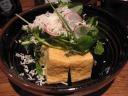
| "Deep-fried tofu topped with fresh winter herbs" that turned out to be
watercress and radish. The shredded white stuff is grated horseradish.
The tofu was softly fried.
|